How I Organized My Notes for a 15-Credit Semester (Walkthrough)
Five classes, five different professors, five different note-taking styles. Here's the system I built to keep everything organized — and the mistakes I made along the way.
Priya S.
Sophomore, Pre-Med

Time Management · EZ Grades
Last semester I took 15 credits: Organic Chemistry, Genetics, Cell Biology, Statistics, and a writing seminar. Each professor had a completely different teaching style, and I was drowning in notes by week three.
Here's the system I eventually built, including the mistakes I made before I got there.
The Problem
My first mistake was trying to use the same note-taking approach for every class. Organic Chemistry needs diagrams and reaction mechanisms. Genetics needs tables and family trees. Statistics needs worked examples. The writing seminar needed close reading annotations. One system didn't fit all of them.
My second mistake was keeping everything in one notebook. By week four, I had a notebook that was half Orgo, half Genetics, with Statistics problems randomly interspersed. Finding anything was a nightmare.
The System I Built
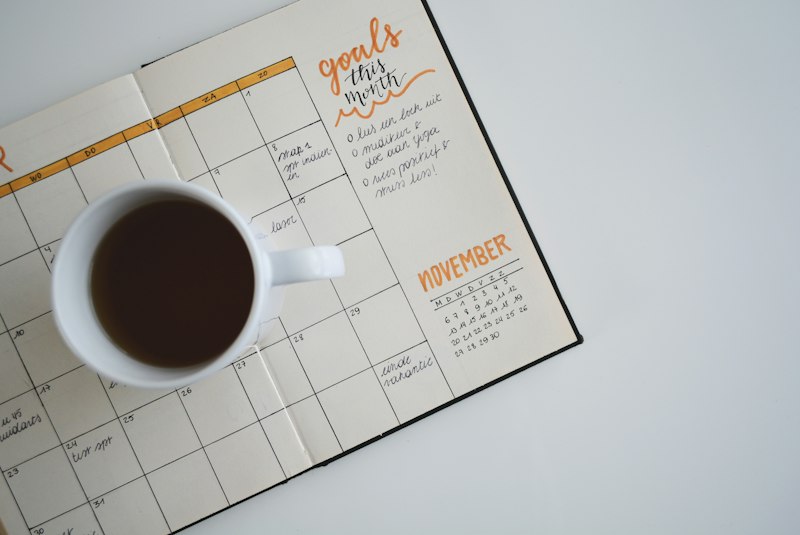
One notebook per subject. This sounds obvious but it took me three weeks to implement. I bought five cheap spiral notebooks — one per class — and kept them in a folder with the corresponding syllabus.
A weekly "master list" in a separate notebook. Every Sunday, I'd write out everything I needed to do that week across all five classes: readings, problem sets, upcoming exams, office hours I wanted to attend. This gave me a single place to see the whole picture without digging through five notebooks.
Digital notes for Orgo, paper for everything else. I found that typing Orgo notes was faster and easier to search, but that drawing reaction mechanisms on a tablet was awkward. My compromise: I typed lecture notes on my laptop, then drew the mechanisms by hand on paper and stapled them to the printed notes. Messy, but it worked.
A "to review" sticky note on each notebook. At the end of each class, I'd write on a sticky note on the front cover: the three things from today's lecture I wasn't sure about. This gave me a ready-made review list for each subject.
What I'd Change
I'd set up the system at the start of the semester, not week three. The first few weeks of a semester are the easiest — the material is lighter, the pace is slower — and that's the best time to build habits.
I'd also be more ruthless about what I wrote down. I spent too much time transcribing things that were already in the textbook. Notes should capture what the professor emphasized, what confused me, and what wasn't in the reading — not a verbatim record of the lecture.
Note-Taking Methods by Subject

After a semester of trial and error, here's what I found worked best for each type of subject:
Science courses (Orgo, Genetics, Cell Bio): Combination of typed notes for text content and hand-drawn diagrams for mechanisms and processes. The diagrams are too important to skip, and typing them is awkward.
Math and Statistics: Worked examples are everything. I write out every example from class, even if I think I understand it. Then I try to redo the examples without looking at my notes. If I can't, I go back and figure out what I missed.
Writing seminars and humanities: Close reading annotations in the margins of the text, plus a separate notebook for synthesis notes. The annotations capture my immediate reactions; the synthesis notes connect ideas across readings.
Lecture-heavy courses: The Cornell method works well here — main notes in the center, cues in the left margin, summary at the bottom. The cue column becomes a ready-made review tool.
The Weekly Review Habit
The single most valuable habit I built was a weekly review. Every Sunday, I'd spend 30 minutes going through my notes from the previous week:
- Read through each subject's notes
- Identify anything I didn't understand and mark it with a question mark
- Add those questions to my "to ask" list for office hours
- Update my "to review" sticky notes on each notebook
This weekly review meant I was never more than a week behind on any subject, which made exam prep much less stressful.
Frequently Asked Questions
Q: Should I take notes on paper or digitally?
Research suggests handwriting notes leads to better retention than typing, probably because you have to process and summarize rather than transcribe. But digital notes are easier to search and organize. My recommendation: handwrite notes for subjects where understanding matters (sciences, math), type for subjects where you need to capture a lot of information quickly (lectures with lots of content).
Q: How do I keep notes organized when professors jump around?
Use a loose-leaf binder instead of a bound notebook. This lets you insert pages in the right order after the fact. Alternatively, leave space in your notes and fill in the connections later when you review.
Q: What do I do with notes after the semester is over?
For subjects in your major or that build on each other: keep them. For general education requirements you won't revisit: recycle after the grade is finalized. Keeping everything creates clutter; keeping nothing means you can't reference past work.
Q: Is it worth rewriting notes after class?
Rewriting notes can be valuable if you're actively synthesizing and reorganizing, not just copying. The key question: are you thinking while you rewrite, or just transcribing? If you're just transcribing, it's low-value. If you're reorganizing, adding connections, and filling in gaps, it's high-value.
Related Articles

90 Days with Anki: My Spaced Repetition Experiment (With Actual Stats)

The Most Popular Study Trends on TikTok Right Now — Do They Actually Work?
