How I Prepared for My AP Exams: A Month-by-Month Account
I took four AP exams in one year. Here's exactly what I did each month, what worked, what I'd change, and my final scores.
Carlos M.
High School Senior

Test Preparation · EZ Grades
Junior year I took AP Chemistry, AP US History, AP English Language, and AP Statistics. I want to document exactly what I did to prepare, because when I was looking for advice, most of what I found was either too vague ("study consistently!") or too intense ("do 500 practice problems a day!").
Here's the real version.
January–February: Building the Foundation
I started by getting the official College Board course descriptions for each exam and reading through the learning objectives. This sounds boring, but it was genuinely useful — it told me exactly what the exam could test, which meant I wasn't wasting time on things that wouldn't appear.
For each subject, I identified my weakest areas using the diagnostic tests in the prep books. I bought the Barron's books for Chem and Stats, and the Princeton Review for APUSH and AP Lang. I didn't read them cover to cover — I used them as reference tools, going to specific chapters when I needed to review a topic.
March: Consistent Review
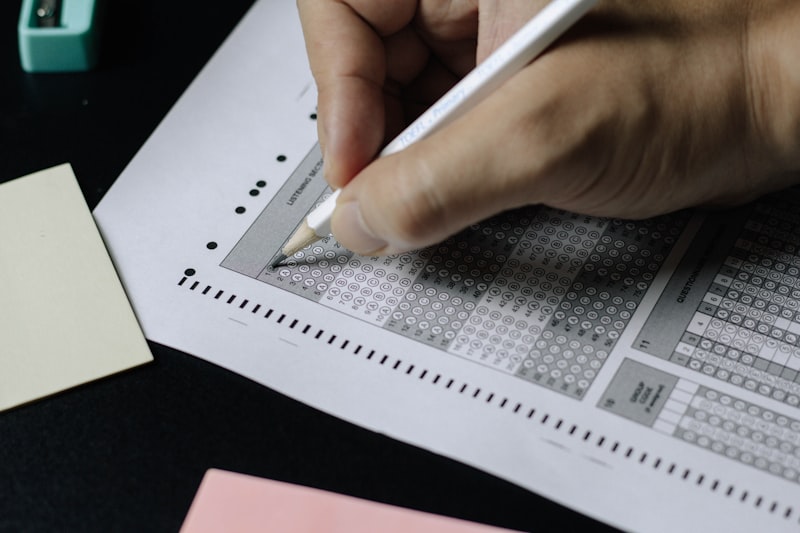
March was about building habits. I committed to 30 minutes of AP review every day — not a huge amount, but consistent. I rotated subjects so I was touching each one at least twice a week.
The most useful thing I did in March: I started a "wrong answers" notebook. Every time I got a practice question wrong, I'd write it in the notebook with the correct answer and the reason I got it wrong. By April, this notebook was my most valuable study tool.
April: Ramping Up
April is when I started doing full-length practice exams. I did one practice exam per subject in April, under real conditions — timed, no notes, no phone.
The results were humbling. My Chem score was lower than I expected. My APUSH score was better than I expected. This gave me clear information about where to focus my final month of preparation.
May: Final Preparation

The two weeks before each exam, I focused almost entirely on that subject. I reviewed my wrong answers notebook, did targeted practice on my weak areas, and did one more full practice exam.
The night before each exam: I reviewed my notes lightly, packed my bag, and went to bed at a reasonable time. I did not try to cram new material.
The Results
AP Chemistry: 4. AP US History: 5. AP English Language: 4. AP Statistics: 5.
I'm happy with these. The APUSH and Stats scores were better than I expected; the Chem score was exactly what I expected given my practice exam results.
What I'd Change
I'd start the practice exams earlier. Doing my first full practice exam in April meant I only had one month to act on the results. If I'd done a diagnostic practice exam in February, I'd have had three months to address my weak areas.
Subject-by-Subject AP Prep Notes
For anyone preparing for the same exams I took, here are my specific notes:
AP Chemistry: The most conceptually demanding of the four. Focus on understanding the underlying principles, not just memorizing procedures. The free-response questions require you to explain your reasoning, not just calculate answers. Khan Academy's AP Chemistry content is excellent and free.
AP US History: The exam is heavily focused on historical thinking skills (causation, continuity and change, comparison) rather than just facts. Practice writing DBQs (Document-Based Questions) and LEQs (Long Essay Questions). The College Board's AP Classroom has good practice materials.
AP English Language: This is a skills exam, not a content exam. The skills (rhetorical analysis, argument, synthesis) improve with practice. Write practice essays under timed conditions. Read good nonfiction and pay attention to how authors construct arguments.
AP Statistics: More conceptual than computational. Focus on understanding what statistical tests mean and when to use them, not just how to calculate them. The free-response section requires clear written explanations.
The Wrong Answers Notebook: How to Use It
The wrong answers notebook was my most valuable study tool. Here's exactly how I used it:
- Every time I got a practice question wrong, I wrote the question (or a summary of it) in the notebook
- I wrote the correct answer and the reason I got it wrong
- I categorized the error: content gap (I didn't know the material), reasoning error (I knew the material but reasoned incorrectly), or careless mistake
- Before each exam, I reviewed the notebook, focusing on content gaps and reasoning errors
Frequently Asked Questions
Q: Is it worth taking AP exams if I'm not confident I'll get a 4 or 5?
Possibly. A 3 on an AP exam still earns college credit at many schools. Even if it doesn't, the experience of taking a college-level course in high school is valuable preparation. Check the credit policies of the colleges you're applying to before deciding.
Q: How do I choose which AP courses to take?
Take AP courses in subjects you're genuinely interested in and good at. Don't take AP courses just to impress colleges if you're going to struggle and get a low grade — a B in a regular course is often better than a C in an AP course.
Q: Is Khan Academy enough for AP prep, or do I need a prep book?
For most subjects, Khan Academy is sufficient for content review. A prep book adds value for practice tests and test-taking strategies. The official College Board practice tests are the most accurate representation of the real exam and should be prioritized over third-party practice tests.
Q: How do I manage preparing for multiple AP exams at once?
Don't try to study all subjects simultaneously. Focus on one subject at a time, rotating through them. In the final month, focus on each subject in the two weeks before its exam date. Spreading your attention too thin is less effective than concentrated preparation.
Related Articles

I Tried 5 Different Study Apps — Here's Which One Actually Saved Me Time
10 Free Study Resources for Students: Independent Comparison (2026)
