Open Book Exams Are Harder Than They Look — Here's Every Mistake I Made
I walked into my first open book exam thinking it would be easy. I walked out having barely finished. Here's what I got wrong and how I prepared differently the second time.
James T.
Senior, Computer Science

Test Preparation · EZ Grades
I thought open book exams were a gift. You can look everything up — how hard could it be? I found out the hard way.
My first open book exam was a disaster. I spent so much time looking things up that I barely finished. The questions weren't asking me to recall facts — they were asking me to apply concepts, analyze situations, and construct arguments. Having the book open didn't help with any of that, and flipping through it wasted precious time.
Here's what I learned.
Mistake 1: Not Preparing Because "I Can Look It Up"
The biggest mistake. Open book exams test application and analysis, not recall. If you don't understand the material deeply enough to apply it, having the book open won't help you.
Prepare for an open book exam the same way you'd prepare for a closed book exam — understand the concepts, not just the facts.
Mistake 2: Not Organizing My Materials
I brought my textbook and a notebook full of unorganized notes to my first open book exam. Finding anything took forever. For my second open book exam, I prepared a one-page summary sheet for each major topic, organized by concept. I could find anything in seconds.
Mistake 3: Looking Up Things I Should Have Known
Every time I looked something up, I lost time. For my second exam, I made sure I knew the core concepts cold — so I only needed to look up specific details, not fundamental ideas.
What I Did Differently the Second Time
I prepared a "cheat sheet" (allowed by the professor) that contained: key definitions, important formulas, a summary of each major concept, and a list of the most common question types with my approach for each.
I also did practice problems under timed conditions with my materials available — so I could practice using my resources efficiently rather than discovering on exam day that I didn't know how to find things quickly.
The Result
Second open book exam: significantly better. I finished with 10 minutes to spare and felt like I'd actually answered the questions rather than just scrambling to find information.
How to Prepare Your Materials for an Open Book Exam
The key insight: your materials need to be organized for retrieval, not for learning. Here's how I prepare:
Create a master index. A one-page list of every major topic with the page number where it's covered. When I need to find something, I go to the index first, not the table of contents.
Make concept summary sheets. One page per major concept with: definition, key points, common applications, and any formulas or examples. These are faster to use than the textbook.
Tab your textbook. Use sticky tabs to mark the most important sections. Color-code by topic if you have multiple subjects.
Prepare formula sheets. For quantitative subjects, a single sheet with all relevant formulas, organized by topic. This is faster than hunting through the textbook.
The Right Mindset for Open Book Exams
The biggest mindset shift: open book exams are not easier than closed book exams. They're different. They test deeper understanding — the ability to apply, analyze, and synthesize — rather than recall. Prepare accordingly.
Students who do well on open book exams are the ones who understand the material well enough that they rarely need to look things up. The book is a safety net, not a crutch.
The Cognitive Challenge of Open-Book Exams
Open-book exams are psychologically disorienting for students who are used to traditional closed-book tests. The presence of your notes and textbook creates a false sense of security — you feel like you have all the answers available, so you don't need to prepare as thoroughly. This is the most common and most costly mistake students make with open-book exams.
The reality is that open-book exams are typically designed to test higher-order thinking: analysis, synthesis, application, and evaluation. These are skills that can't be looked up. You can look up a formula, but you can't look up how to apply it to a novel problem. You can look up a historical event, but you can't look up how to construct an argument about its significance.
If the exam only required recall, the professor wouldn't need to give you the book — you could just memorize the facts. The fact that you have the book means the exam is testing something harder than recall.
How to Prepare for an Open-Book Exam
Preparation for an open-book exam is different from preparation for a closed-book exam, but it's not less preparation — it's different preparation.
Understand the material deeply. You need to understand concepts well enough to apply them, not just recognize them. Practice explaining concepts in your own words without looking at your notes.
Organize your materials for speed. If you need to look something up during the exam, you need to find it quickly. Create a table of contents for your notes, use tabs or bookmarks in your textbook, and highlight key formulas and definitions. Time spent searching for information during the exam is time not spent answering questions.
Practice with the materials. Do practice problems with your notes open, under time pressure. This is different from studying with your notes open — you're simulating exam conditions, not learning new material.
Identify what you actually need to look up. After practicing, you'll have a clearer sense of what you genuinely need to reference versus what you can recall. Focus your organizational efforts on the former.
Time Management During Open-Book Exams
Open-book exams typically have the same or tighter time constraints as closed-book exams. Students who spend too much time looking things up often run out of time before completing the exam.
The rule of thumb: if you can't find something in your notes within 60 seconds, move on and come back to it. Don't let one question derail the entire exam.
For questions that require extended reasoning, sketch out your argument before writing it. Open-book exams often include essay questions or multi-step problems where the structure of your response matters as much as the content. A minute of planning saves five minutes of revision.
What Professors Are Looking For
When professors grade open-book exams, they're looking for evidence of understanding, not just correct answers. A correct answer with no explanation of reasoning gets less credit than a partially correct answer with clear reasoning. Show your work, explain your thinking, and make explicit connections to course concepts — even when the question doesn't explicitly ask you to.
Frequently Asked Questions
Q: Should I bring everything to an open book exam?
Bring only what you can use efficiently. A disorganized pile of notes is worse than nothing because it wastes time. Bring your organized summary sheets, a tabbed textbook, and your formula sheet. Leave the rest at home.
Q: How much time should I spend preparing materials vs. studying the content?
For your first open book exam in a course: spend 70% of your prep time on understanding the content and 30% on organizing your materials. Once you've done one open book exam, you'll have a better sense of what materials are actually useful.
Q: Can I use my phone or laptop in an open book exam?
This depends entirely on the professor's rules. Always clarify what's allowed before the exam. If digital materials are allowed, make sure your notes are organized and searchable.
Q: What if I run out of time on an open book exam?
Same as any exam: prioritize. Do the questions you know well first. For questions you're less sure about, write a brief outline of your answer before writing in full — if you run out of time, the outline shows the professor you knew the approach even if you didn't finish.
Related Articles
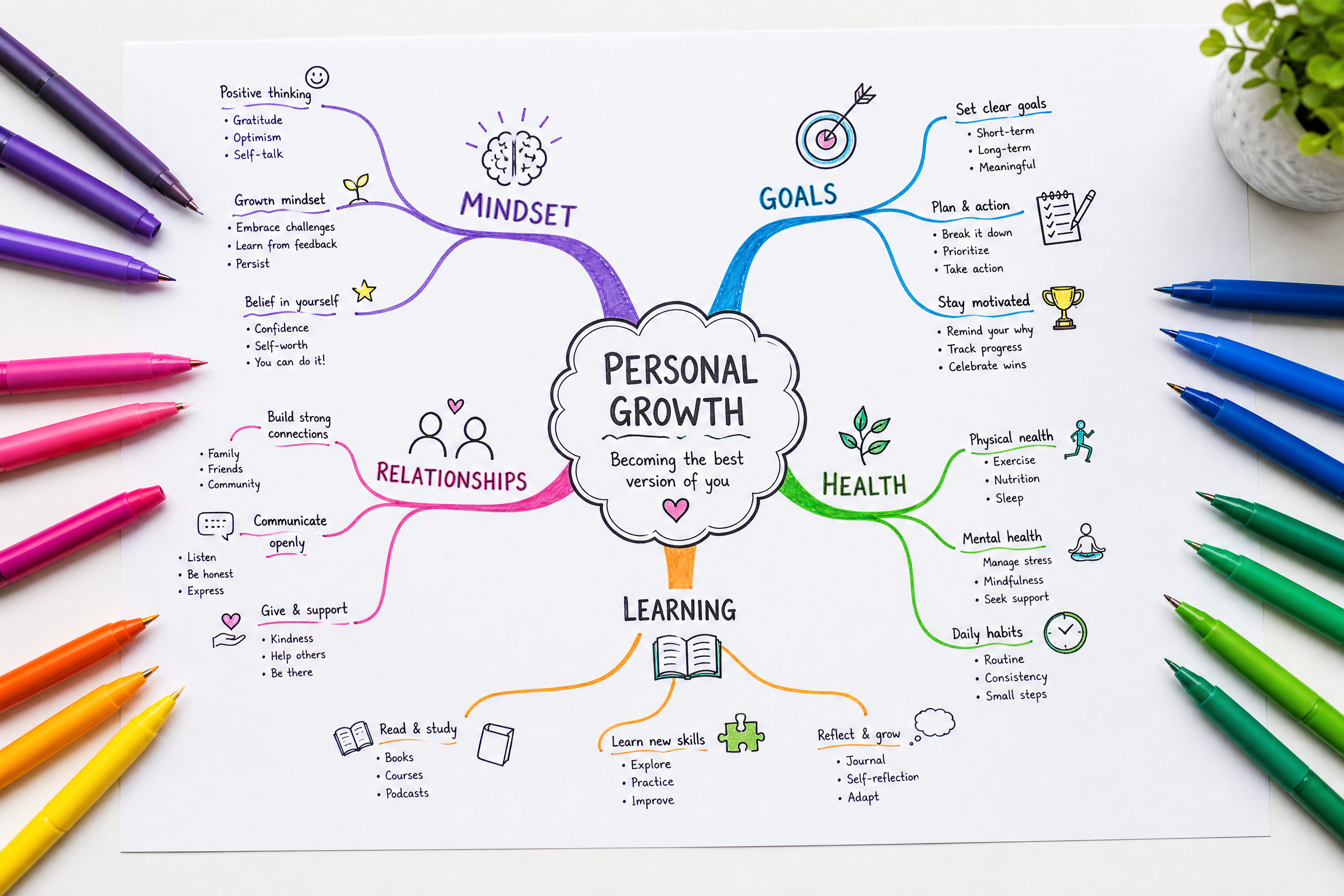
I Made Mind Maps for Every Chapter of My History Textbook — Here's What Happened

I Tried the Feynman Technique on My Hardest Subject — Here's My Honest Take
